PUERTO
RICO
While Puerto Rico is technically a U.S. territory, its rich Latin culture, music, cuisine, and traditions firmly earn its place among the great destinations of Latin America and the Caribbean.
THE CARIBBEAN'S EASIEST CULTURAL ESCAPE
Puerto Rico offers one of the most accessible and rewarding Caribbean travel experiences for U.S. travelers. Though part of the United States, the island feels unmistakably Latin American — Spanish-speaking, deeply Caribbean, musically alive, and culturally distinct.
San Juan combines centuries-old Spanish colonial architecture with beaches, nightlife, luxury hotels, and one of the best food scenes in the Caribbean. Beyond the capital, Puerto Rico shifts quickly into rainforest mountains, surf towns, offshore islands, coffee country, waterfalls, and coastal fishing villages.
The island is compact enough to combine several very different experiences in a single trip: Old San Juan, El Yunque rainforest, bioluminescent bays, Caribbean beaches, surfing on the west coast, and mountain roads through the island's interior.
Best for travelers seeking Caribbean beaches, rainforest, culture, music, food, and easy logistics — with a distinctly Latin spirit and no passport hassles for U.S. citizens.
Puerto Rico lies in the northeastern Caribbean between the Dominican Republic and the Virgin Islands. The island naturally divides into several travel zones: metropolitan San Juan and the northeast coast, the rainforest and eastern mountains, the surfing-focused west coast, the central highlands, and the offshore islands of Vieques and Culebra. Most visitors arrive through San Juan, but the island is compact enough that travelers can experience beaches, mountains, rainforest, and colonial towns within a relatively short drive.
Geography
WHERE EVERYTHING IS
Puerto Rico is surprisingly compact — the entire island is roughly 100 miles wide and 35 miles from north to south. Most major destinations are within two hours of San Juan, and the offshore islands of Vieques and Culebra are accessible by ferry or short flight. Click any marker for details.
Tap or click markers for details. Pinch / scroll to zoom.
WHAT MAKES PUERTO RICO STAND APART
Old San Juan
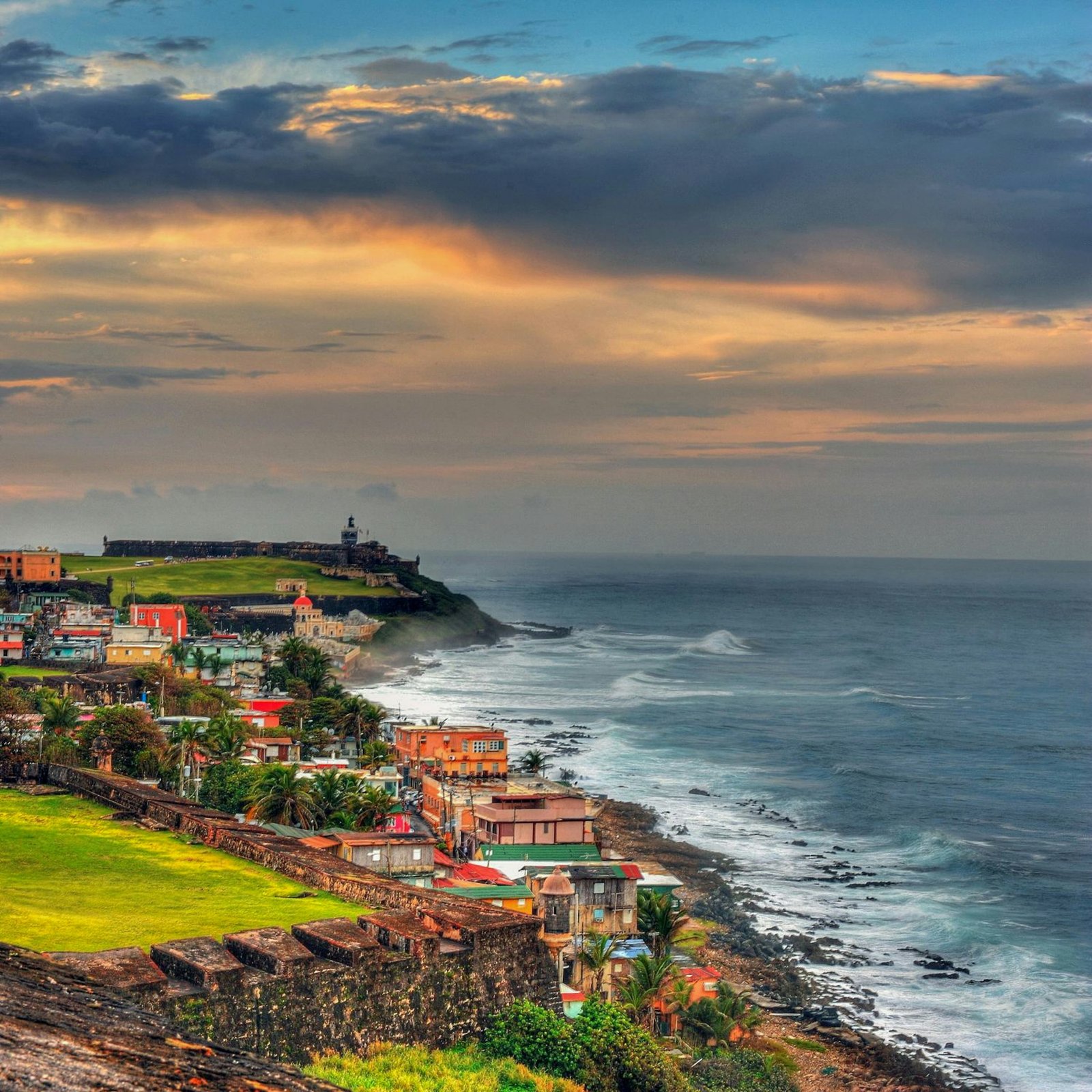
One of the oldest and most atmospheric colonial cities in the Americas. Blue cobblestone streets, colorful Spanish buildings, forts overlooking the Atlantic, lively plazas, cafés, bars, and music create one of the Caribbean's great urban settings.
No Passport Required
For U.S. citizens, Puerto Rico combines Caribbean atmosphere with domestic travel simplicity — no passport, no customs line returning home, U.S. currency, and direct flights from many mainland cities.
El Yunque Rainforest
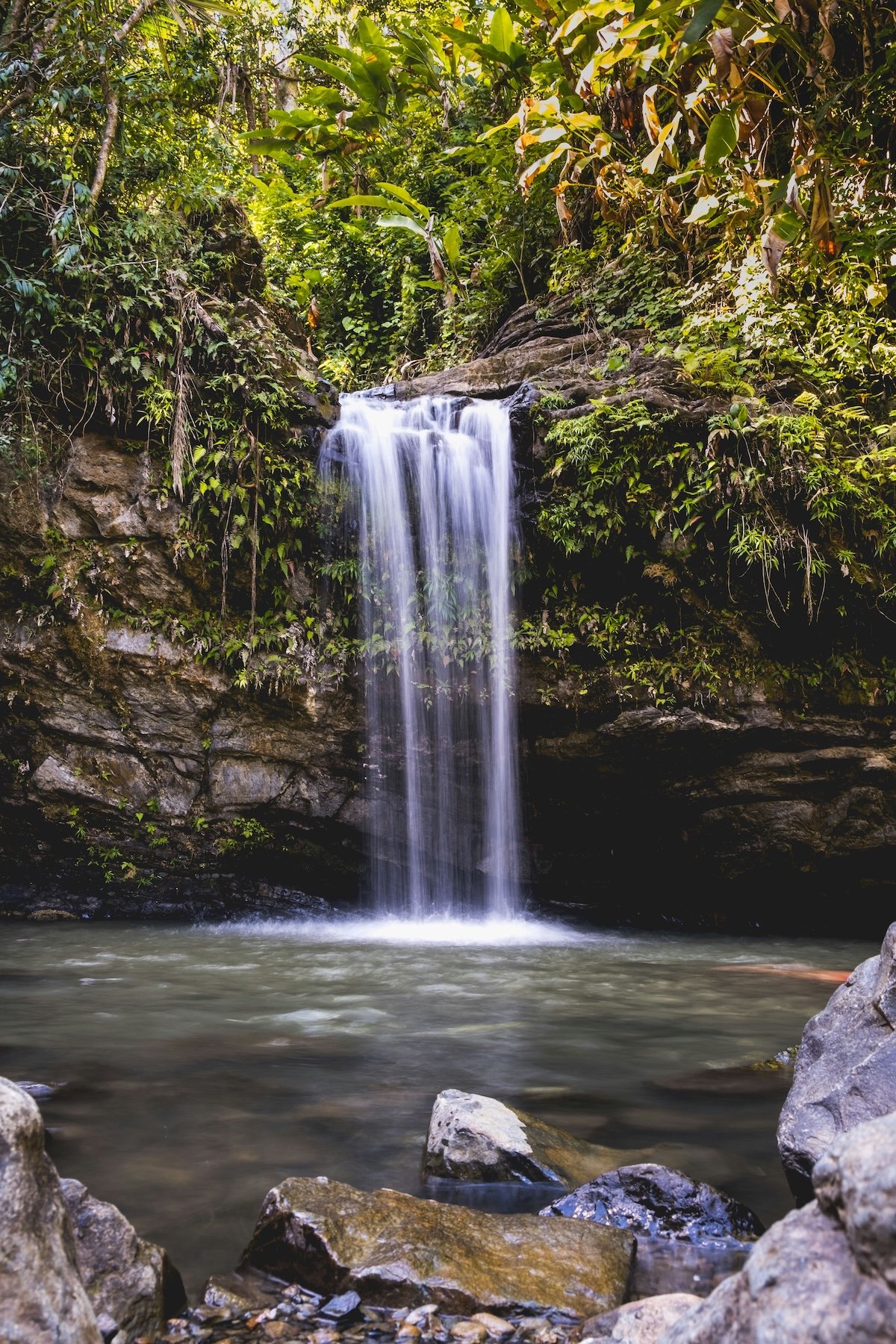
The only tropical rainforest in the U.S. National Forest System. Waterfalls, hiking trails, dense jungle, mountain rivers, and extraordinary biodiversity are all within easy reach of San Juan.
Beaches & Offshore Islands
Puerto Rico offers a wide range of beaches — from resort-lined stretches near San Juan to the spectacular turquoise waters of Flamenco Beach on Culebra and the quieter Caribbean feel of Vieques.
Music & Culture
Salsa, reggaetón, bomba, plena, and Puerto Rico's broader musical culture are central to the island's identity. Festivals, nightlife, dancing, and live music remain woven into everyday life.
Surfing & Adventure
The west coast around Rincón and Aguadilla is one of the Caribbean's premier surf regions. Offshore diving, paddleboarding, zip-lining, hiking, canyoning, fishing, and sailing are all widely available.
TOP EXPERIENCES
Plan around experiences, not just regions.
Old San Juan
Spend several days exploring the historic core of San Juan. Walk the blue cobblestone streets, visit Castillo San Felipe del Morro and Castillo San Cristóbal, dine in local restaurants, listen to live music, and stay out late — Puerto Rico's nightlife culture is deeply social and energetic.
El Yunque National Forest
Just east of San Juan, El Yunque offers rainforest trails, waterfalls, swimming holes, observation towers, and lush mountain scenery. Early mornings are best for cooler temperatures and fewer crowds.
Vieques
Known for wild horses, quiet beaches, and Mosquito Bay — considered one of the brightest bioluminescent bays in the world. Vieques feels slower and less developed than the mainland island and rewards travelers who want a quieter Caribbean atmosphere.
Culebra & Flamenco Beach
Culebra's Flamenco Beach consistently ranks among the Caribbean's finest beaches — brilliant turquoise water, soft white sand, and excellent snorkeling. Best experienced as an overnight stay rather than a rushed day trip.
Rincón
Puerto Rico's surf capital on the west coast. Surfing, sunsets, beach bars, yoga retreats, and whale watching during winter months create a laid-back atmosphere very different from San Juan.
Ponce
Puerto Rico's second city offers museums, architecture, plazas, and a slower southern Caribbean pace. The Parque de Bombas firehouse remains one of the island's iconic landmarks.
Central Highlands & Coffee Country
The mountains around Adjuntas, Jayuya, and Utuado reveal a greener, cooler, and more traditional Puerto Rico. Coffee haciendas, winding mountain roads, and small towns provide a completely different side of the island.
Bioluminescent Bays
Puerto Rico has several famous bioluminescent bays, including Mosquito Bay on Vieques and Laguna Grande near Fajardo. Kayaking at night through glowing water remains one of the island's signature experiences.
Fajardo & Offshore Excursions
The northeast coast around Fajardo is a major departure point for catamaran trips, snorkeling excursions, sailing charters, and island-hopping adventures.
Camuy River Cave Park
One of the largest cave systems in the Western Hemisphere, featuring enormous caverns, sinkholes, underground rivers, and dramatic limestone geology.
WHEN TO VISIT PUERTO RICO
Puerto Rico's tropical climate means warm temperatures year-round, but season matters for weather, crowds, and specific activities.
Best Overall
December through April offers the most comfortable weather, lower humidity, and the least rainfall. This is peak season, especially around holidays and spring break.
Summer
May through August brings warmer temperatures, excellent beach weather, and lower hotel rates outside holiday periods. Afternoon showers are common but usually brief.
Hurricane Season
June through November is hurricane season, with the highest risk generally from August through October. Travelers during this period should monitor forecasts carefully and consider flexible booking policies.
Surf Season
The best surf on the west and northwest coasts generally arrives from November through March, when Atlantic swells are strongest.
Whale Watching
Humpback whales migrate near Puerto Rico from roughly January through March, particularly off the west coast near Rincón.
TRAVEL ESSENTIALS
Airport Codes
SJU — Luis Muñoz Marín International Airport (San Juan). BQN — Aguadilla / Rafael Hernández Airport. PSE — Ponce. VQS — Vieques. CPX — Culebra.
Entry Requirements
U.S. citizens do not need a passport to enter Puerto Rico. Travelers from outside the United States should confirm current entry requirements before departure.
Currency
U.S. Dollar. Credit cards are widely accepted throughout the island.
Language
Spanish and English are both official languages. Spanish dominates daily life, though English is widely spoken in tourism areas.
Tipping
15–20% is standard in restaurants unless a service charge is included. Hotel staff, guides, and drivers are generally tipped similarly to the mainland United States.
Food & Drink
Puerto Rican cuisine blends Spanish, African, Taíno, and Caribbean influences. Local specialties include mofongo, lechón, arroz con gandules, tostones, fresh seafood, and rum-based cocktails. Puerto Rico is home to some of the Caribbean's most famous rum producers.
Getting Around
Rental cars are strongly recommended outside San Juan. Roads are generally good, though traffic can be heavy near the capital. Uber operates in parts of San Juan, but coverage outside the metro area is limited.
Safety
Puerto Rico is generally straightforward for tourism. Visitors should use normal urban precautions in San Juan and avoid isolated areas late at night. Pay attention to weather and ocean conditions, especially during hurricane season and on beaches with strong currents.
Safety Note
As a U.S. commonwealth, Puerto Rico is not subject to U.S. State Department international travel advisories. For most visitors, the island presents the same range of considerations as any major domestic destination — urban precautions in San Juan, standard water and ocean safety, and awareness of weather conditions during hurricane season. Crime in established tourist areas is generally not targeted at visitors, and the neighborhoods most travelers use — Old San Juan, Condado, Isla Verde, and the main resort corridors — operate at a level comparable to other U.S. destinations. The most meaningful weather risk is tropical storms during the June–November hurricane season; travelers booking during this period should use flexible reservations and monitor forecasts.
KEY AREAS
The main travel regions — each offering a distinctly different side of the island.
San Juan & Metro Area
The island's cultural and tourism hub. Old San Juan, Condado, Isla Verde, Santurce, museums, nightlife, restaurants, and beaches all concentrate here.
Northeast Coast
Fajardo, Luquillo, El Yunque, ferries to Vieques and Culebra, sailing excursions, and rainforest access make this one of Puerto Rico's most versatile regions.
Vieques & Culebra
Smaller offshore islands known for beaches, snorkeling, bioluminescence, and a quieter Caribbean atmosphere than the mainland.
West Coast
Rincón, Aguadilla, and Isabela anchor Puerto Rico's surf and adventure coast, with a more relaxed and independent-travel feel.
Southern Coast
Ponce and the surrounding region offer a drier climate, historic architecture, and fewer crowds than the north coast.
Central Mountains
Coffee plantations, cooler temperatures, forests, caves, waterfalls, and traditional mountain towns define Puerto Rico's interior.
PARKS & WILDLIFE
Rainforest, reefs, and Caribbean waters — Puerto Rico's natural environments are as varied as the island itself.
El Yunque National Forest
Puerto Rico's best-known natural attraction — a tropical rainforest with waterfalls, hiking, orchids, parrots, mountain rivers, and dense jungle scenery. The only tropical rainforest in the U.S. National Forest System.
Mosquito Bay, Vieques
One of the brightest bioluminescent bays in the world. Best experienced by kayak on moonless nights, when the water glows blue-green with dinoflagellates.
Flamenco Beach, Culebra
Culebra's famous crescent-shaped beach with exceptionally clear Caribbean water and protected marine environments. Consistently ranked among the Caribbean's finest beaches.
Mona Island
Often called the "Galápagos of the Caribbean," this remote island between Puerto Rico and the Dominican Republic offers caves, cliffs, reefs, and important wildlife habitat. Access is limited and usually expedition-based.
Guánica Dry Forest
A UNESCO Biosphere Reserve on the southern coast, dramatically different from El Yunque — cactus forest, dry climate, birdlife, and coastal hiking.
Desecheo Island Marine Reserve
Protected waters off the west coast known for excellent diving and marine biodiversity.
Traveler Questions
PUERTO RICO TRAVEL FAQ
Do U.S. citizens need a passport to visit Puerto Rico?
No. Puerto Rico is a U.S. territory, so U.S. citizens do not need a passport to visit — a government-issued photo ID such as a driver’s license is sufficient. Non-U.S. citizens should carry whatever documentation they would need to enter the United States.
What is the best time to visit Puerto Rico?
The dry season from mid-December through April offers the most reliable weather. Hurricane season runs from June through November, with the greatest risk in August and September. El Yunque National Forest is beautiful even during wetter months.
Is Puerto Rico expensive compared to other Caribbean islands?
Puerto Rico sits in the middle of the Caribbean price range. As a U.S. territory, costs are broadly comparable to the continental United States. A key advantage: no currency exchange, no international roaming issues, and no customs on return for U.S. travelers.
What should I not miss in Puerto Rico?
Old San Juan is non-negotiable — the colorful colonial architecture, El Morro fortress, and the dining and nightlife scene make it one of the finest historic cities in the Caribbean. Beyond the capital: El Yunque National Forest, the bioluminescent bays at Vieques, and the surf beaches near Rincón.
LOCAL SPECIALISTS WE TRUST
Puerto Rico’s accessibility is one of its greatest strengths — no passport for U.S. citizens, no currency exchange, English widely spoken. These operators help you experience the island beyond the resort zone and find the Puerto Rico most visitors miss.
Adventure & Nature
Tours To Do PR
Puerto Rico adventure operator running El Yunque rainforest and waterfall tours, the Charco Azul cave experience, and a range of island excursions with round-trip transportation from San Juan included.
Best for: Active travelers wanting guided El Yunque hikes and off-the-beaten-path cave and waterfall experiences with easy San Juan pickup.
H&J Island Adventures
Fajardo-based operator founded in 2014, known for their “Muddy Rainforest Adventure” — a hands-on El Yunque hike through waterfalls and natural waterslides. Also runs snorkeling tours, a Puerto Rican chinchorro (local bar) cultural experience, and private custom tours.
Best for: El Yunque with a local twist — off-trail rainforest adventure and a genuine introduction to Puerto Rican outdoor culture.
Caribbean Breeze Adventures
Full-day Puerto Rico excursion specialist covering El Yunque rainforest with natural waterslides and Luquillo Beach, La Parguera bioluminescent bay boat tours, Old San Juan historical walks, and Culebra and Vieques ferry transfers — all with San Juan transportation included.
Best for: Combining El Yunque, the bio bay, and island day trips in one well-organized operator with consistent reviews.
Bioluminescent Bays
San Juan Tours
San Juan–based activity operator covering El Yunque rainforest hikes, Old San Juan walking tours (El Morro + San Cristóbal), bio bay night kayaking at Fajardo, Culebra Island snorkeling, ATV tours, and horseback riding — one of the most comprehensive activity providers on the island.
Best for: El Yunque rainforest adventures, Old San Juan history walks, and bio bay kayaking.
Kayaking Puerto Rico
Operates bio bay kayak tours at Laguna Grande (Fajardo) — the most accessible bioluminescent bay from San Juan. Also runs mangrove, reef, and coastal kayaking excursions across the northeast.
Best for: Travelers based in San Juan who want the bioluminescent bay experience without the ferry trip to Vieques.
Culture & History
Tour Guide Debbie
Licensed Puerto Rico tour guide since 1999, leading small-group cultural and history tours in Old San Juan, Aguada, and Isabela. Recommended by Fodor's, Frommer's, and Lonely Planet, and featured in The New York Times and USA Today.
Best for: Colonial history, cultural heritage, and storytelling tours in Old San Juan and Puerto Rico's historic northwest region.
Latin Travel does not book tours directly. These are editorial selections. Please mention Latin Travel when you contact them — it helps us keep this guide current.
Ready to plan your Puerto Rico trip? From a long weekend in Old San Juan to a week combining the rainforest, offshore islands, and surf coast — we can help you build a memorable itinerary.
Ask Jim and Jane About Puerto Rico