Gran Fondo cycling has always been about more than the distance. It is about the road, the landscape, the people riding beside you, and the city or region waiting at the finish. In Latin America, that combination is becoming especially powerful: professional organization, dramatic scenery, passionate cycling communities, and destinations that reward riders who turn a race weekend into a real trip.
For years, many international cyclists looked first to Europe for destination riding. But the calendar is changing. UCI Gran Fondo and gravel events are now appearing across Latin America, giving riders the chance to qualify, compete, or simply ride beautiful closed-road courses in places that still feel fresh to many North American and European travelers.
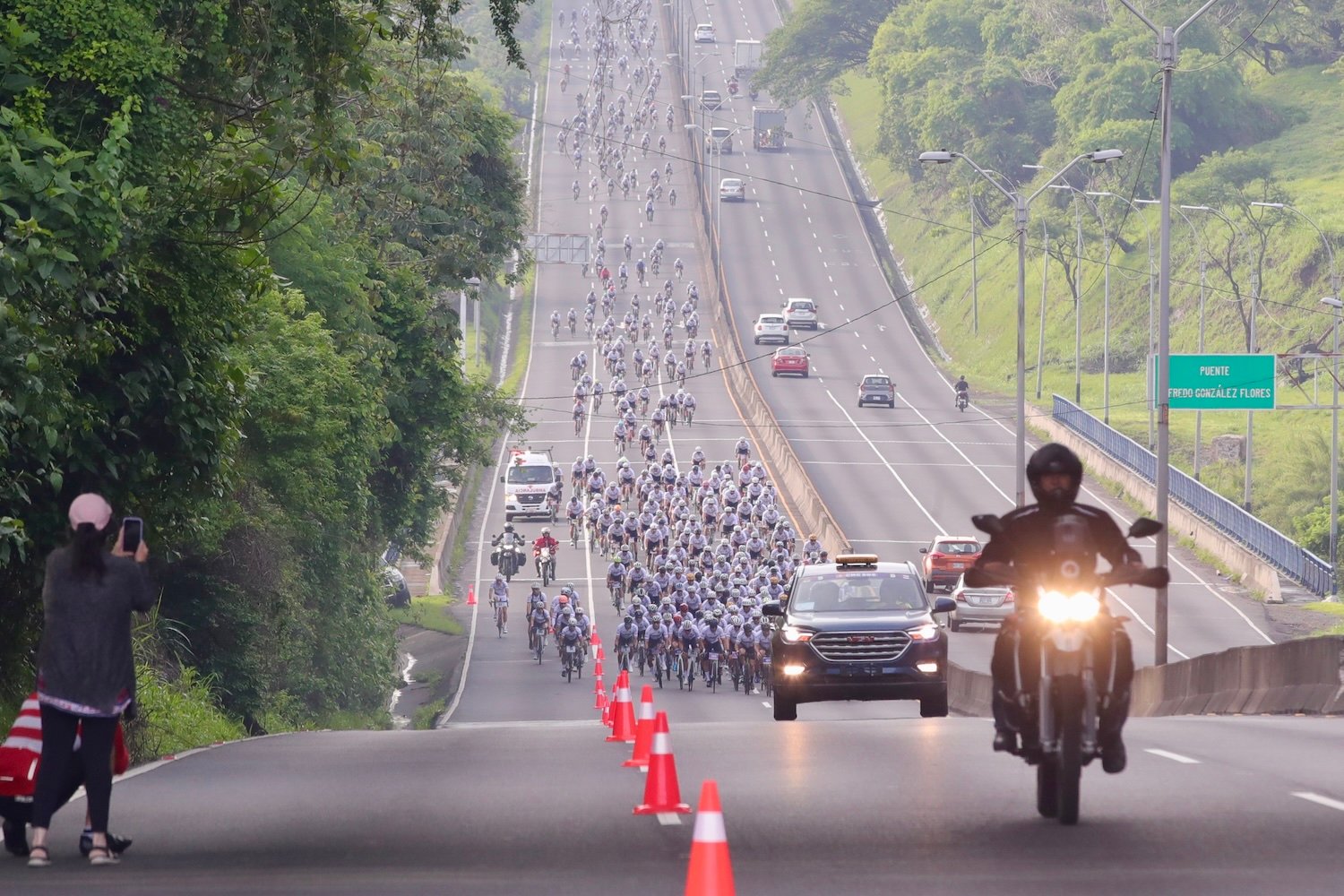
The appeal is obvious once you see the images: thousands of riders rolling out under UCI banners in Bogotá, coastal bike lanes in southern Brazil, Andean climbs, Pacific beaches, rainforest roads, Patagonian lakes, and post-ride meals that feel inseparable from the journey. These are not just events. They are invitations to experience a country through the rhythm of the bike.
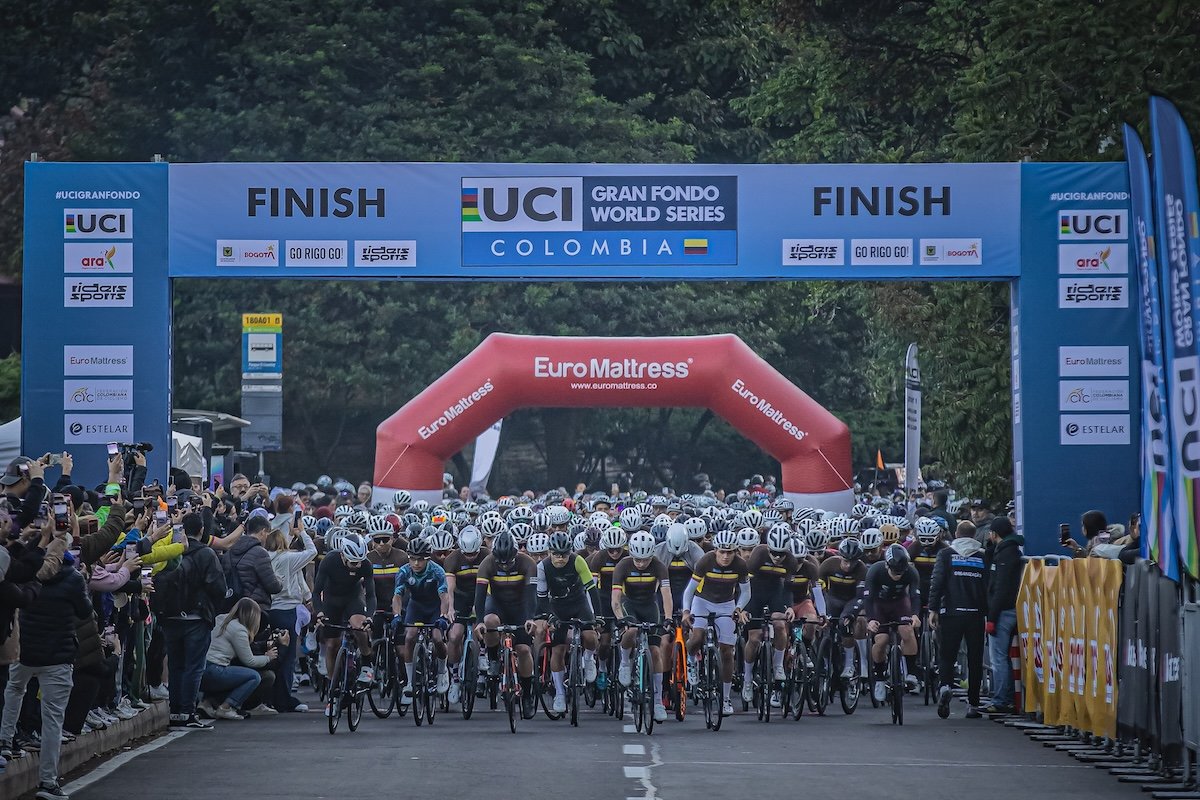
The best Gran Fondos in Latin America are not simply races. They are travel anchors — a reason to bring the bike, bring family or friends, and discover a country from the saddle.
2026 Latin America Gran Fondo Calendar
EVENTS TO BUILD A TRIP AROUND
Dates change from year to year, and riders should always confirm details with the official event sites before booking travel. But the 2026 Latin America calendar gives a clear picture of how quickly the region is becoming part of the global Gran Fondo circuit.
Costa Rica — Jacó
A tropical early-season event on the Central Pacific coast, ideal for riders who want beach time, rainforest excursions, and warm-weather riding.
Register Now ↗Chile — Los Ríos
A southern Chile setting of lakes, rivers, forests, and volcano country, with natural extensions to Valdivia, the Lake District, and wine regions farther north.
Event Page ↗Brazil — Timbo
Brazil’s southern Santa Catarina cycling region combines coastal cities, rainforest roads, European-influenced towns, and a strong local riding culture.
Register Now ↗Ecuador — Salinas
A Pacific coast event that can pair with Quito, the Andes, Cuenca, or even a longer Galápagos extension.
Register Now ↗Argentina — 7 Lagos
Patagonia’s Seven Lakes region near Villa La Angostura is one of the most visually powerful cycling destinations in South America.
Register Now ↗Colombia — Medellín
Now hosted in Medellín, Colombia’s UCI Gran Fondo combines one of the world’s deepest cycling cultures with mountain roads, spring-like weather, and the local energy of Rigoberto Urán’s GoRigoGo community.
Register Now ↗Colombia
THE HEART OF LATIN AMERICAN CYCLING
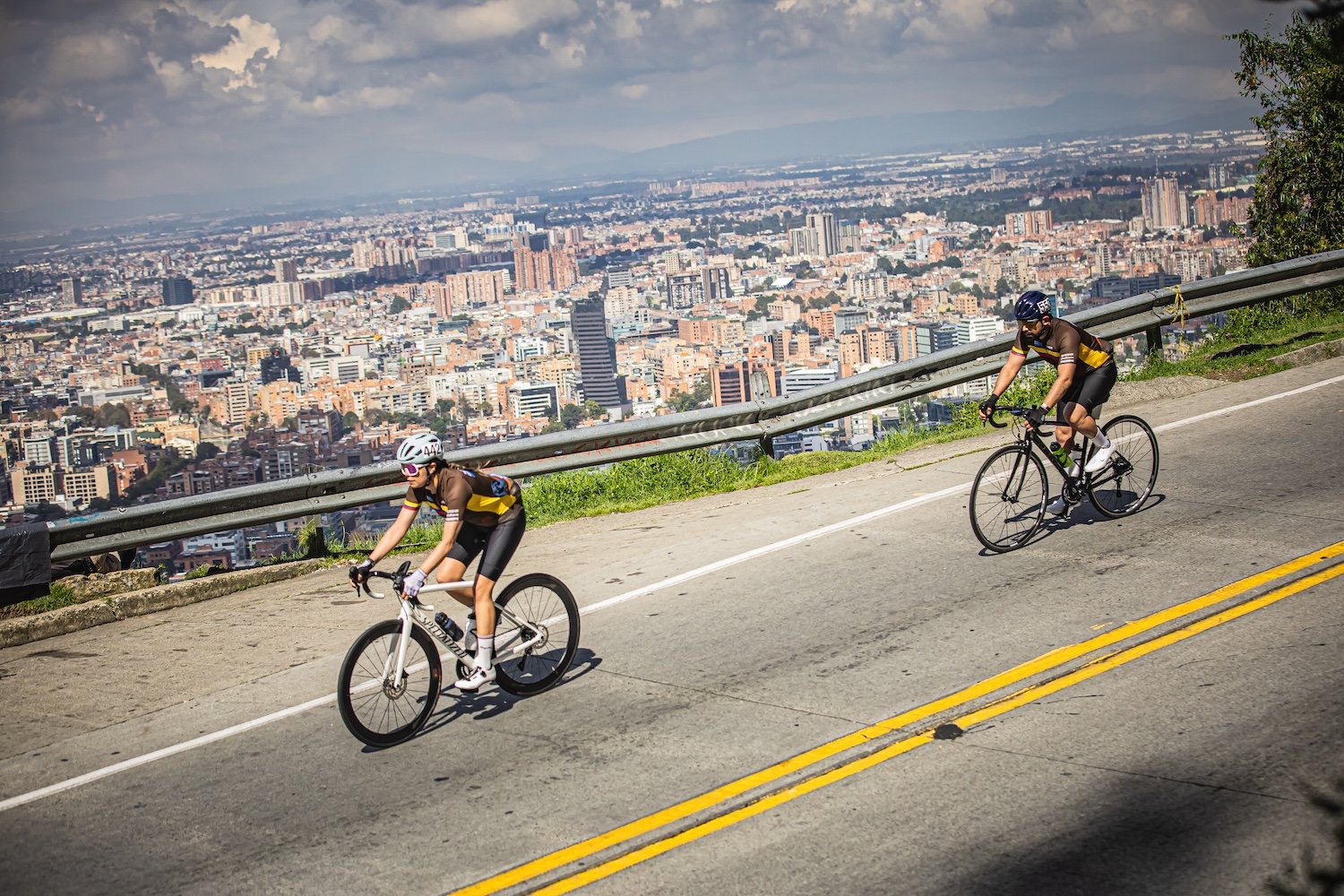
If one country immediately gives Latin America’s Gran Fondo calendar international cycling credibility, it is Colombia. Cycling here is not a niche sport. It is part of the national conversation. Colombian climbers have shaped grand tours, weekend riders fill mountain roads above the cities, and the sport carries a level of public recognition that visiting cyclists feel almost immediately.
For 2026, the UCI Gran Fondo World Series Colombia event moves from Bogotá to Medellín — a fitting shift for a country where cycling culture runs especially deep in the mountains of Antioquia. Medellín has become one of Latin America’s most dynamic cycling cities, combining spring-like weather, steep training roads, modern infrastructure, and a passionate riding community that fills the roads almost every morning.
The city is also closely tied to one of Colombia’s most beloved professional riders, Rigoberto Urán, whose GoRigoGo movement has helped inspire recreational and amateur cycling throughout the country. As a partner in the Gran Fondo, GoRigoGo brings additional local energy and authenticity to the event, reinforcing the idea that this is more than a race weekend — it is an immersion into one of the world’s great cycling cultures.
Medellín also rewards those who stay beyond the event. Riders can extend into the Coffee Region, explore colonial towns like Guatapé and Jardín, ride famous mountain routes outside the city, or continue onward to Cartagena and Colombia’s Caribbean coast. For families and non-riding companions, Medellín offers excellent restaurants, nightlife, museums, cable-car views into the hillsides, and a climate that encourages people to spend time outdoors year-round.
Brazil
BEACHES, FOREST ROADS AND SOUTHERN BRAZILIAN STYLE
Brazil may be the most surprising Gran Fondo destination for riders who know the country mainly through Rio, the Amazon, or Carnival. In the south, especially Santa Catarina, the experience is different: coastal cities backed by green hills, strong cycling communities, German and Italian influences, and a road network that moves quickly from urban beachfronts to lush interior valleys.
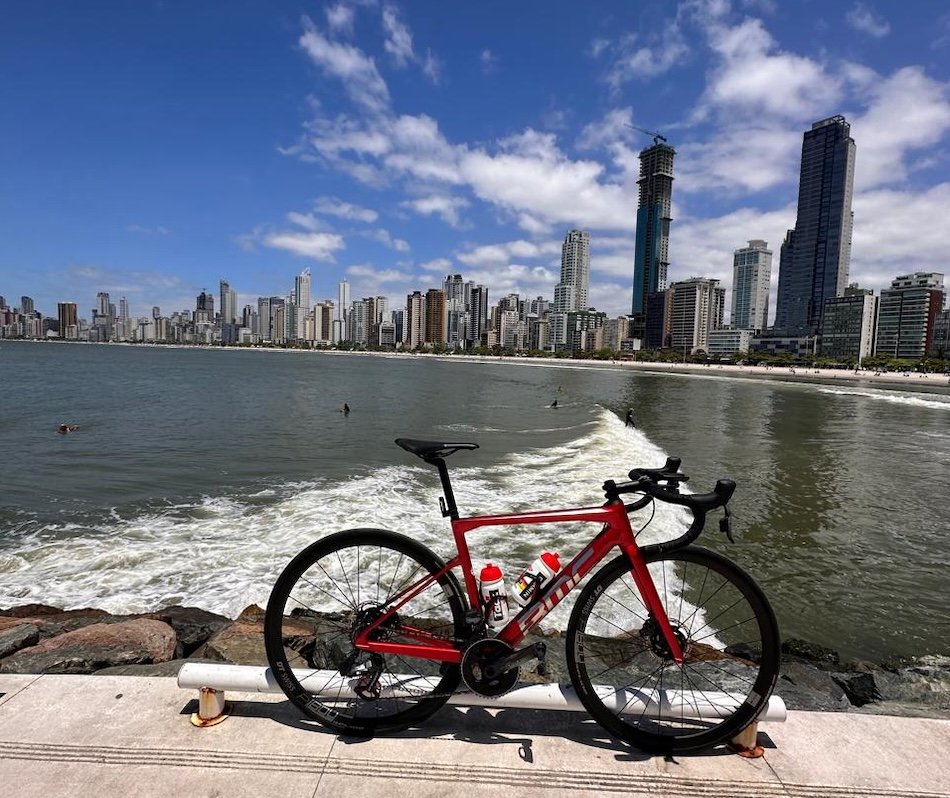
The images from southern Brazil tell a story that race calendars often miss. Riders cruise dedicated beach bike lanes along modern high-rise waterfronts, stop for cold Guaraná after training rides, and find themselves within reach of forested river valleys, small mountain towns, and Atlantic beaches. It is an unusually complete cycling-travel setting: a place where the ride, the post-ride meal, the beach walk, and the next morning’s spin all feel connected.
Timbó and the Vale Europeu region add another layer. This is a part of Brazil many foreign travelers know little about, yet it has exactly the qualities destination cyclists love: rolling terrain, cultural distinctiveness, green landscapes, and a strong local outdoor identity. For riders who have already done the familiar European or North American fondos, southern Brazil offers something both organized and genuinely new.
Argentina
PATAGONIA AND THE 7 LAKES
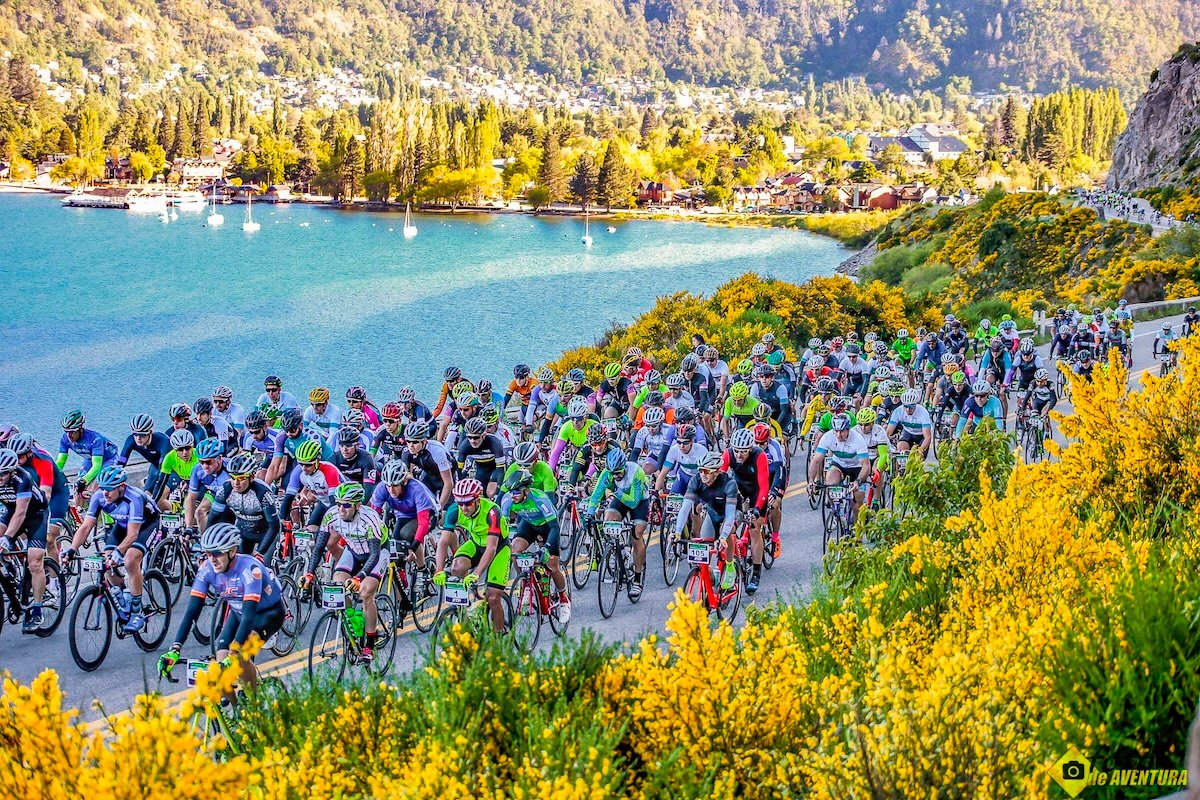
Some events sell themselves almost entirely through place. Argentina’s Gran Fondo 7 Lagos, based around Villa La Angostura and the lake country of northern Patagonia, is one of them. The name alone suggests the appeal: roads threading through forests, mountain lakes, Andean horizons, and one of the most scenic landscapes in the Americas.
For riders, Patagonia offers a different emotional register than Bogotá or Brazil. It is quieter, colder, more elemental. The reward is space: open roads, alpine air, wooden lodges, mountain towns, and post-ride days that can include hiking, lake excursions, fly fishing, or time in Bariloche and San Martín de los Andes. This is the kind of event that can anchor an entire vacation.
For non-riding companions, Patagonia is equally strong. The scenery is not something to glimpse through a race window; it is the reason to linger. A Gran Fondo here becomes part of a larger Patagonian itinerary, and for many cyclists that may be the real draw.
Chile
LOS RÍOS, LAKES AND VOLCANO COUNTRY
Chile’s Los Ríos region brings the Gran Fondo idea into one of South America’s most atmospheric landscapes: rivers, forests, cool southern air, and the gateway to lake-and-volcano country. It is a very different Chile from the desert north or the polished wine valleys near Santiago.
The travel appeal is broad. Riders can connect the event with Valdivia, the Lake District, the island of Chiloé, or longer itineraries south toward Patagonia. The climate, terrain, and natural setting make the region feel almost purpose-built for endurance travel: scenic without being overdeveloped, active without feeling crowded, and distinctive enough to justify a trip in its own right.
Ecuador
A PACIFIC COAST ENTRY POINT
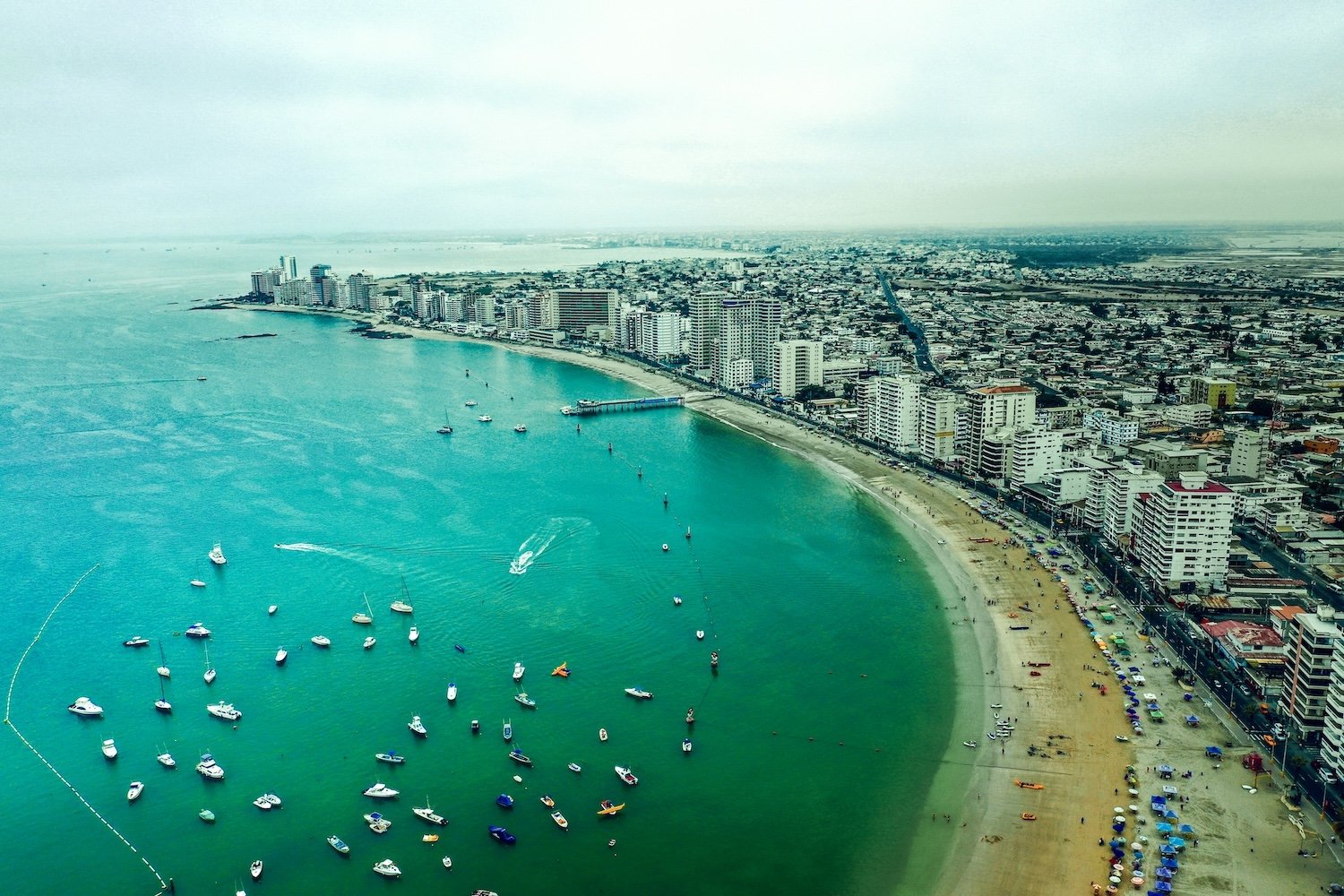
Ecuador adds another useful contrast to the Latin American Gran Fondo map. While the country is often associated with Andean cities, volcanoes, cloud forests, and the Galápagos, the Salinas event introduces a Pacific coast setting into the mix.
That matters for trip planning. A rider can build a warm-weather coastal race weekend, then extend into Quito, Cuenca, the Avenue of the Volcanoes, or the Galápagos. Ecuador’s compact geography makes it unusually easy to combine very different environments in a single trip. For cyclists who want a race without sacrificing a broader travel experience, that is a major advantage.
Costa Rica
TROPICAL RIDING FROM JACÓ
Costa Rica’s Jacó event gives the calendar a tropical Central American anchor. The appeal here is not only the ride, but the ease of turning a cycling weekend into a beach, rainforest, and wildlife trip. Jacó sits on the Central Pacific coast, close enough to San José for straightforward access, yet surrounded by surf beaches, national parks, canopy tours, and warm-weather training roads.
Even when an annual edition has passed, the event still belongs in the broader story because it gives riders a reason to watch for the next year’s date. Costa Rica is already familiar to many adventure travelers; adding a Gran Fondo gives cyclists a more specific reason to go.
How to Use This Guide
MAKE THE EVENT THE START OF THE TRIP
The smartest way to approach a Gran Fondo in Latin America is not to fly in, race, and leave. The event should be the beginning of the experience. Arrive early enough to ride the local roads, settle into the rhythm of the place, and spend time with the people who live and ride there year-round. Stay afterward for the beaches, mountains, wine regions, rainforest towns, cafés, markets, and landscapes that made the destination worth visiting in the first place.
That is what makes these events different from simply pinning on a number in your home city or state. A Gran Fondo in Latin America becomes part of a larger journey. Riders meet people from around the world who share the same obsession with the bike, then spend the following days exploring countries they may never otherwise have visited. One trip can combine a world-class ride with volcanic landscapes in Costa Rica, Patagonia’s lake country, Brazil’s Atlantic coast, Colombia’s mountain culture, or Ecuador’s Pacific beaches.
The future of sports travel in Latin America may not be one massive event. It may be hundreds of smaller reasons for active travelers to discover the region one race, ride, and country at a time.
For many cyclists, these trips become the experiences they remember most — not necessarily because of finish times, but because of the roads ridden, the conversations after the event, the shared meals, and the feeling of discovering an entirely new place through movement and effort. The bike simply becomes the reason to go.
Plan the Trip
EXPLORE THE COUNTRY GUIDES
Use Latin Travel’s destination guides to plan around the ride — where to stay, when to go, what to see, and how to turn race weekend into a real journey.
View Country Guides